It's no secret that the pandemic has had a major impact on the role of office spaces around the world. With many collaborators adapting to work from home, and some in a hybrid mode, this transformation has been positive to safeguard the collective well-being of employees of billions of organizations.
As the pandemic has progressed, and people have adapted and learned to live in this new normality, so have workspaces. Without forgetting the great benefits that remote work has provided, there are clear advantages in physical collaborative spaces.
Many organizations still see value in physical office spaces: for their teams to collaborate more seamlessly, for them to connect and develop interpersonal relationships, and for them to strengthen their work culture.
So, what benefits do offices provide to businesses and employees?
1. Offices can support employee wellness
As offices slowly reopen their doors, businesses must consider the well-being of their staff. A survey in the UK revealed that 41% of employees have felt more anxious and isolated than ever due to the lockdown, while 42% admitted to having problems with their mental health more than usual during this time. A combination of working in the office and working from home is a great way to regain that balance.
Humans are social beings, and historically we have had the need to feel connected. Decades of academic studies affirm that human beings need social interaction to stay psychologically healthy. Remote work is here to stay, and it's a great complement for organizations to implement hybrid work.
2. Offices keep work and home life separate
Balancing work and family life may not always be such an easy task to accomplish from home. The office provides a clear workplace, which employees can physically leave at the end of each day. Being able to mentally detach from work helps reduce stress.
3. Offices drive local economies
There are communities that have been hit hard by the drop in spending by office workers. The office spaces that are in the main streets of the cities, where people live and work, allow to revitalize the regions and indirectly reactivate the economy, since this places office workers among the daily commercial flow of other companies that It depends on your move to generate sales.
4. Offices promote innovation and collaboration
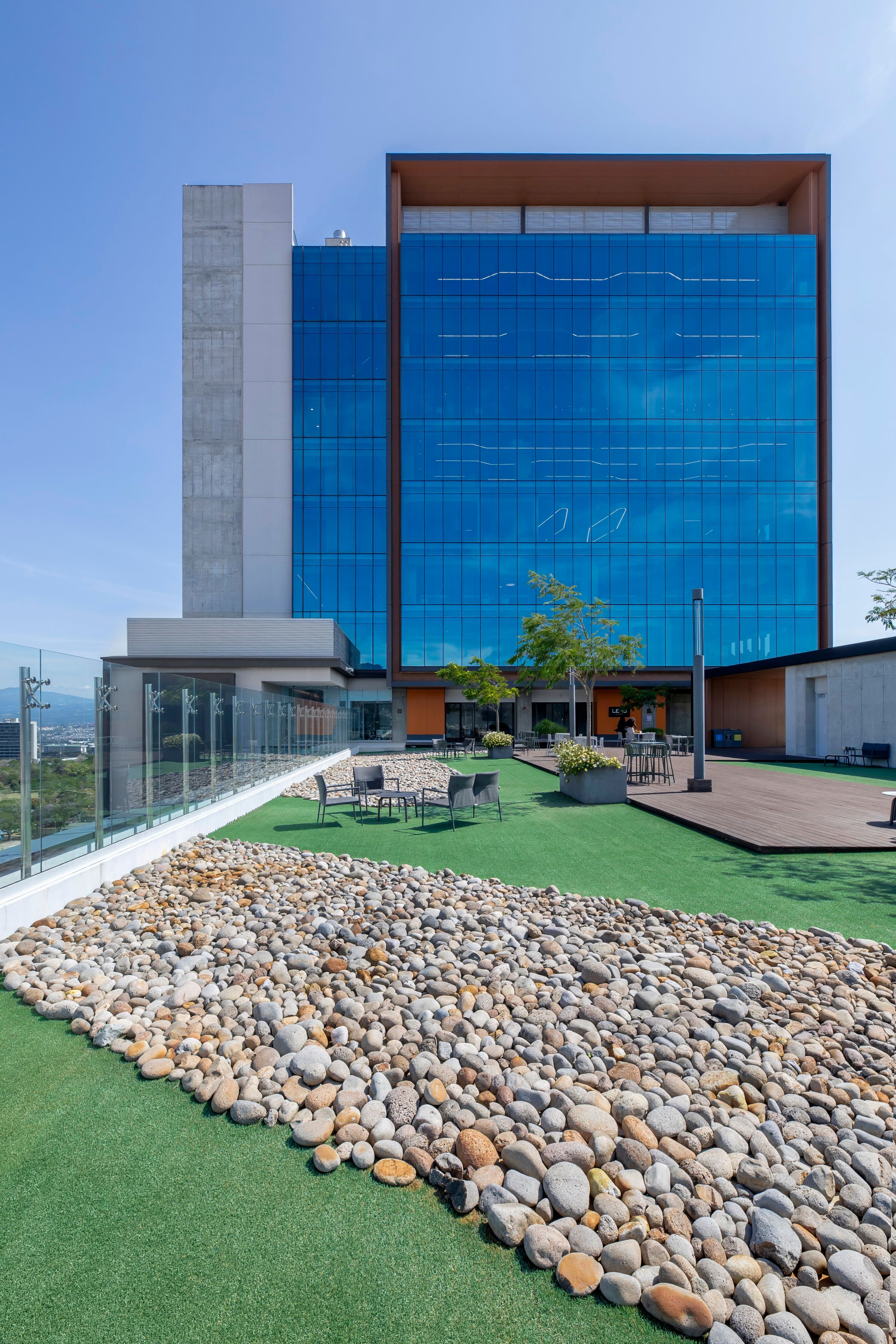
Offices play a vital role in collaboration, creating an environment for collective innovation, productivity, and well-being. This is even reflected in the design of Torre Universal's workspaces, where employees can be productive and relax at the same time.
Ideas can be more easily shared and developed as a team. In addition, it is easier for people to communicate with each other, read moods and emotions, and exchange ideas with each other in a shared space. This creates a warmth and positive work environment that video call connection can hardly replicate and is essential to the success of a team.
5. Offices ensure workplace standards
Workplaces must maintain standards by law, from equipment and desk furniture to temperature. Another benefit of having a physical office, which is related to the culture of the company, is that it guarantees that everyone has the same working conditions. When people work from home, this is not always the case and employees are generally expected to adapt their environment to this.
The current environment of converging industries is forcing organizations to continuously innovate, that also includes their workspaces. Companies that have started their digital transformation process are aware that they are dealing with an increasingly fluid workforce, including telecommuters, while their workspaces must meet higher expectations for productivity improvement.
That is why updated companies are finding ways to build spaces that manage to create a pleasant environment compatible with productivity. Beyond the well-known standing desks and lounging poufs, the office of the future is healthy, harmonious, and inspiring.
Companies are beginning to realize that having more flexible workspaces can help better manage this workforce. These flexible spaces comprise different types of space that can promote collaboration and innovation and attract and retain talent.
Disruptions, uncertainties, and changes are inevitable, but creating an environment based on deep business analysis, consolidated to adapt to an ever-evolving market, is and always will be the best strategy.